Recovery Home Management Software Solutions: What Operators Need to Know
Admin · Aug 2, 2026
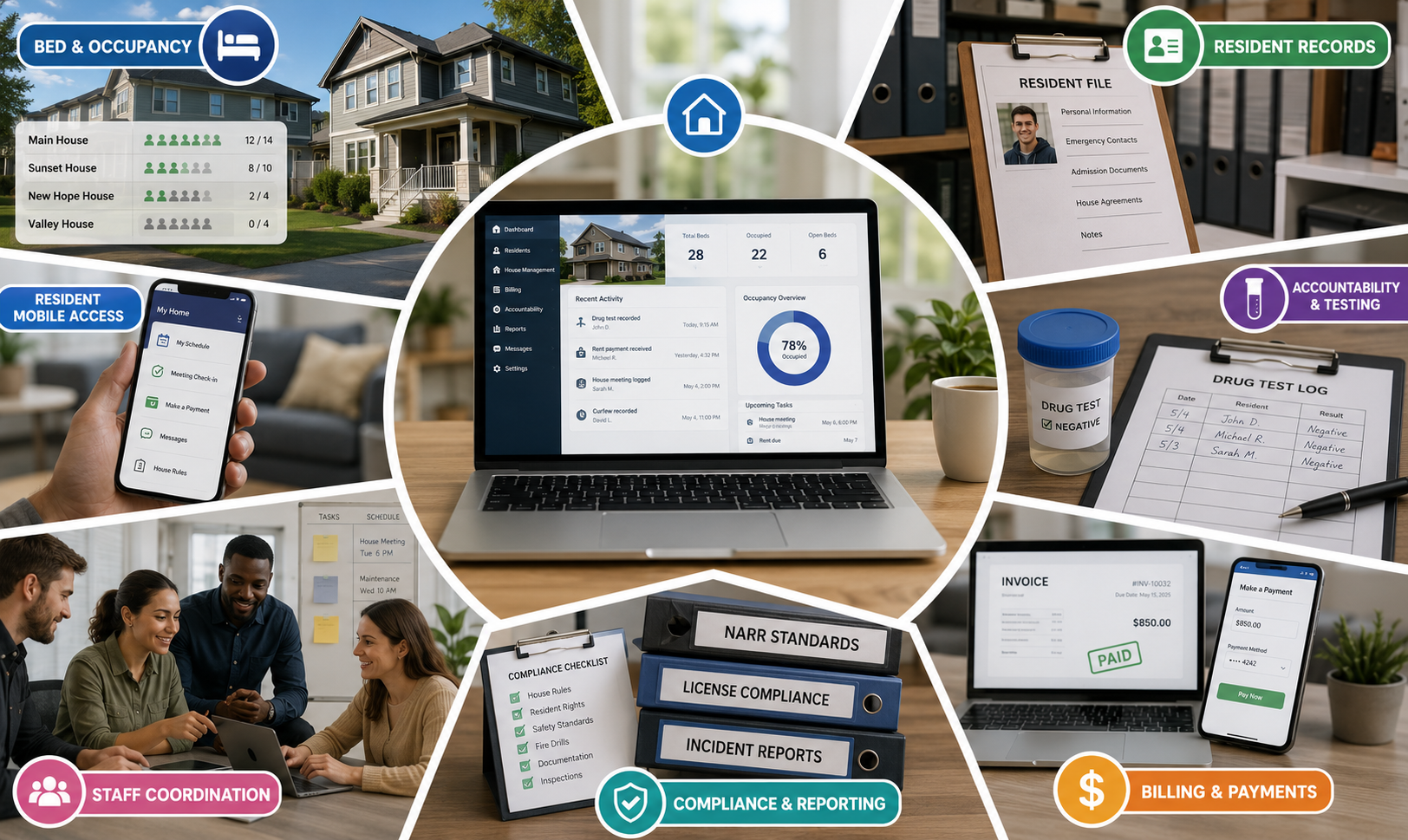
Running a recovery home, whether it's a single sober living house or a network of transitional housing properties, comes with a level of operational complexity that generic property management tools were never built to handle. Bed assignments change weekly. Residents need drug testing logs, house rule tracking, and emergency contact information on file. Rent has to be collected from people navigating early recovery, often with variable income sources. And on top of all of that, most operators also need to stay compliant with state licensing rules and, in many cases, National Alliance for Recovery Residences (NARR) standards.
This is exactly the gap that recovery home management software solutions were built to close. Rather than stitching together spreadsheets, paper intake forms, and a separate payment app, purpose-built platforms bring resident records, billing, compliance documentation, and day-to-day house operations into one system.
This guide walks through what these platforms actually do, the core features worth prioritizing, and how to think about choosing one for your organization. If part of your evaluation process also involves cleaning up existing resident files or converting old paperwork into digital records, tools like PDF Tools and Text Tools from Toolsimpli can help handle that transition without adding another complicated system to learn.
What Is Recovery Home Management Software?
Recovery home management software is a category of operational software designed specifically for sober living homes, halfway houses, and other transitional recovery residences. It differs from general clinical EHR (electronic health record) systems in one key way: it's built around the day-to-day realities of running a house, not just documenting clinical treatment.
That distinction matters more than it might seem at first glance. A clinical EHR is built for documenting therapy sessions, medication management, and treatment plans in a licensed care setting. A recovery home, on the other hand, needs tools for tracking who's staying in which bed, whether rent was paid this week, whether a resident missed curfew, and whether their required drug screen came back clean.
Recovery home management software solutions sit in that operational space, covering resident intake, housing logistics, financial tracking, compliance documentation, and communication, all built around the specific workflow of a sober living environment.
Core Features to Look For
Not every platform in this space offers the same feature set, and the right combination depends heavily on how many houses you operate and what your state's licensing or NARR requirements look like. That said, a few categories of features show up consistently across the strongest solutions.
Bed and Room Management
At the most basic level, operators need a live view of which beds are occupied, which are open, and which residents are assigned where across one or multiple properties. This sounds simple until you're managing more than one house, at which point a shared spreadsheet becomes a liability rather than a convenience. Purpose-built platforms typically offer a dashboard view of occupancy across all properties in real time.
Resident Records and Case Management
This includes intake forms, emergency contacts, admission and discharge dates, house rule agreements, and any documentation required for insurance or grant reporting. Good platforms let staff pull up a resident's full history in one place instead of digging through paper files or disconnected folders.
Drug Testing and Accountability Tracking
Recovery homes rely heavily on structured accountability: drug and alcohol screening logs, curfew tracking, infractions, and house privilege status. Software built for this space typically lets staff log test results and incidents directly against a resident's file, creating a timestamped record that matters both for house safety and, in some cases, for legal or insurance documentation.
Billing and Rent Collection
Recovery residents often pay rent through variable funding sources, personal payment, family support, scholarships, or partial insurance coverage, which makes billing more complicated than a standard rental property. Platforms in this category typically support automated invoicing, online and autopay options, and tracking for multiple funding sources per resident.
Compliance and Reporting Tools
For operators working toward or maintaining NARR certification, or complying with state-specific recovery residence regulations, built-in compliance tracking and reporting tools significantly reduce the administrative burden. This typically includes incident reporting, audit-ready documentation, and standardized reporting formats.
Staff Coordination and Communication
Chore assignments, shift handoffs, maintenance requests, and staff messaging all need a home somewhere. Rather than relying on group texts or a whiteboard in the office, integrated platforms keep this coordination tied directly to the house and resident records it affects.
Resident-Facing Mobile Access
Several platforms now include a resident-side app or portal, allowing residents to log meeting attendance, view house schedules, make payments, or communicate with staff directly from their phone. This reduces the manual entry burden on staff while giving residents more ownership over their own accountability.
Comparing the Feature Landscape
The table below summarizes the general categories of functionality found across recovery home management platforms today. Specific feature availability varies by vendor and pricing tier, so this is meant as a planning reference rather than a comparison of any single product.
Feature Category | What It Typically Covers | Why It Matters |
|---|---|---|
Bed & Occupancy Management | Real-time bed tracking, room assignments, multi-property dashboards | Prevents overbooking and gives instant visibility across houses |
Resident Records | Intake forms, emergency contacts, admit/discharge dates, house agreements | Keeps documentation centralized and audit-ready |
Accountability Tracking | Drug testing logs, curfew records, infractions, house privileges | Supports house safety and structured recovery accountability |
Billing & Payments | Invoicing, autopay, multiple funding source tracking | Simplifies rent collection from residents with variable income |
Compliance Tools | NARR-aligned reporting, incident documentation, licensing support | Reduces administrative burden of state and NARR compliance |
Staff Coordination | Task assignment, shift notes, maintenance requests | Keeps house operations organized without side channels |
Resident Mobile Access | Meeting check-ins, payments, schedules, messaging | Increases resident accountability and reduces staff workload |
Recovery Home Software vs. Clinical EHR Systems
One of the most common points of confusion for new operators is whether they need a clinical EHR or a recovery-housing-specific platform. The short answer is that it depends on what level of care you're providing.
If your organization is solely operating sober living or transitional housing without licensed clinical services, a purpose-built recovery home platform will generally cover your operational needs more directly than a clinical EHR, which is often built around therapy documentation and treatment planning workflows that don't map well onto house management.
If your organization also runs an outpatient program, IOP, or any licensed clinical service alongside your housing, you may need both a clinical EHR for treatment documentation and a housing-focused platform, or a combined system if the vendor offers one. Some vendors in this space offer both a clinical EHR and a dedicated housing module, which can simplify things for operators who need both.
Questions to Ask Before Choosing a Platform
Selecting recovery home management software solutions is easier when you go into vendor conversations with a clear list of operational requirements. A few questions worth asking during evaluation:
How many properties and beds do you need to manage today, and how many might you add in the next two years?
Growth changes what "enough" looks like in a platform.
Does the platform support NARR-aligned compliance reporting, or the specific state regulations your homes operate under? Requirements vary meaningfully by state.
How does billing handle residents with multiple or partial funding sources? This is a common pain point that not every platform handles gracefully.
Is there a resident-facing mobile app, and how much manual entry does it remove from staff workflows?
What does onboarding and staff training actually look like? A platform that takes months to fully implement may not be worth the learning curve for a smaller operation.
Is pricing transparent and predictable, or does it require a custom quote that scales unpredictably as you add houses or residents?
Why the Right Software Matters for Recovery Outcomes
It's worth stepping back from the feature checklist for a moment, because the real reason this software category exists isn't just administrative convenience. Recovery homes function best when structure is consistent and accountability is clear. When staff are spending hours each week reconciling spreadsheets, chasing rent payments manually, or searching for a resident's paperwork, that's time not spent on the actual work of supporting people in recovery.
Centralized systems reduce that administrative drag. They also create better documentation trails, which matter both for compliance and for identifying patterns, like which residents may need additional support, before small issues become larger ones. In that sense, choosing the right recovery home management software solution is as much about resident outcomes as it is about operational efficiency.
For operators managing the broader paperwork side of running a home, from resident intake forms to compliance documents, Developer Tools and Image Tools from Toolsimpli can also come in handy for lighter tasks like converting scanned forms or preparing documentation for digital storage, without requiring a dedicated IT setup. For more practical operational guides like this one, visit the Toolsimpli Blog.
Frequently Asked Questions
What is recovery home management software?
It's operational software built specifically for sober living homes and recovery residences, covering resident records, bed management, billing, compliance documentation, and staff coordination in one system.
Is recovery home software the same as an EHR?
Not usually. EHRs are built for clinical documentation in licensed treatment settings, while recovery home software is built around housing operations. Some vendors offer both, which can help operators who run clinical programs alongside housing.
Do small, single-house operators need dedicated software?
Even single-house operators benefit from centralized resident records, billing, and accountability tracking, since manual systems tend to become harder to maintain as resident turnover increases.
What is NARR compliance, and does software help with it?
NARR sets recognized standards for recovery residences. Many recovery home platforms include reporting and documentation tools designed to support NARR-aligned compliance, though operators should confirm specific requirements with their state affiliate.
How much does recovery home management software typically cost?
Pricing varies by vendor, number of properties, and feature tier. Some platforms offer flat monthly pricing regardless of house count, while others price based on beds, residents, or require a custom quote.
Can residents use these platforms directly?
Many platforms include a resident-facing mobile app or portal for tasks like logging meeting attendance, making payments, and viewing house schedules, which reduces manual entry for staff.
Related posts
RadioShack PRO-2096 Software
Between the two main options, ARC96 currently has the more reliable reputation for licensing and ongoing support, while Win96 remains a capable program for anyone who already owns a working license. Either way, having dedicated software turns a tedious, error-prone manual process into something you can finish in a few minutes.

WhiteSnow Software: Who They Are and What They Actually Do
WhiteSnow Software is a real, established software consultancy with over a decade in the industry and a genuine product — Axonator — that it has continued to develop and support. Like any vendor, the right move is to verify current details directly with the company, request references, and compare their offering against your specific project needs rather than relying solely on any single source, including this one.

UART USB Software: A Practical Guide for Hobbyists and Engineers
If you’ve installed the right driver, confirmed your wiring, and matched your baud rate, but you’re still getting garbage data, the problem might not be software at all. A cheap USB logic analyzer lets you actually see the electrical signal on the TX/RX lines, which is often the fastest way to catch wiring or timing issues that software troubleshooting alone won’t reveal.

Wolf3D Software: The Company Behind Ready Player Me’s 3D Avatars
The Wolf3D story is a useful case study for anyone building software in a fast-moving space like the metaverse or 3D avatar tools. A hardware-first idea pivoted into a software product, found real traction by solving a genuine developer pain point, and eventually became valuable enough to attract a major acquisition. It’s also a reminder that platforms you build on top of can shift quickly, so keeping your project’s assets portable and documentation organized is worth the extra effort.

BestOutcome PPM Software Company Overview
BestOutcome has built a long track record in the PPM space, particularly among public sector and healthcare organizations that need rigorous governance and reporting. For organizations already juggling multiple projects and struggling to get a clear, current picture of progress, PM3 is a serious option worth including in any shortlist. For smaller teams running one or two projects, though, a lighter tool is probably the better starting point.

Rippling HR Software Market Share in 2026: What the Numbers Really Show
Rippling isn't the biggest player in HR software by raw market share, and depending on which report you read, it may rank anywhere from third to well down the list. What's harder to argue with is the growth curve. Revenue crossing a billion dollars, tens of thousands of customers, and a steady stream of new features point to a company that's earned its spot on most shortlists.