B2B Lead Generation Software: How to Choose the Right Tool in 2026
Admin · Jul 2, 2026
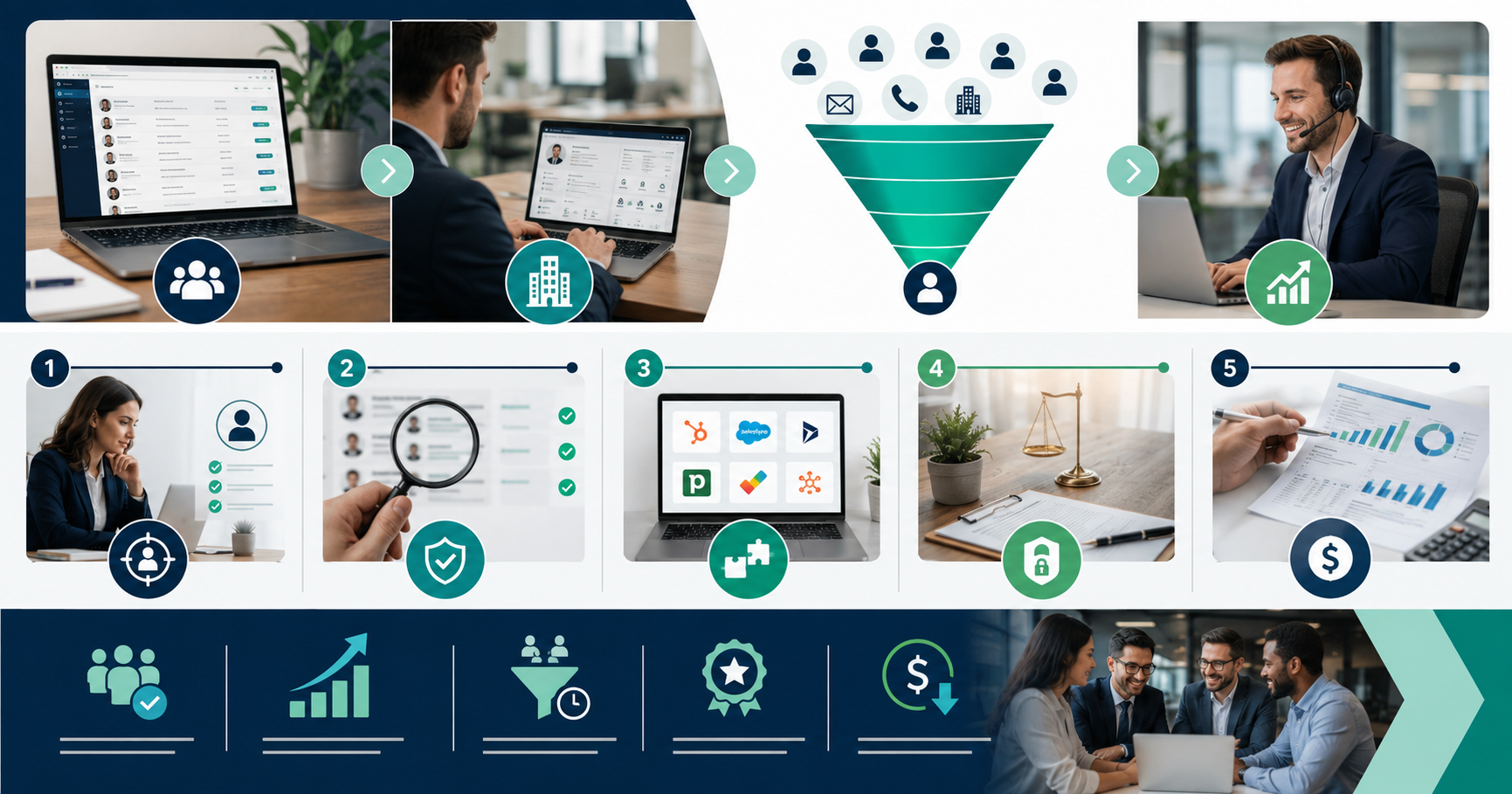
Finding Quality Leads Shouldn't Be the Hardest Part of Selling
Every B2B sales team faces the same challenge—finding qualified prospects before they can even begin selling. Hours spent searching company websites, LinkedIn profiles, and business directories often leave less time for actual customer conversations.
B2B lead generation software eliminates much of this manual work by helping sales teams discover qualified prospects, verify contact information, identify buying intent, and move leads directly into their sales pipeline.
This guide explains how B2B lead generation software works, the different categories available in 2026, what features matter most, and how to choose the right platform for your business.
What Is B2B Lead Generation Software?
B2B lead generation software helps businesses identify, qualify, and manage potential customers more efficiently than manual prospecting.
Most modern platforms combine several powerful capabilities into a single solution.
Feature | Purpose |
Contact Database | Find business contacts and decision-makers |
Company Database | Search organizations by size, industry, location, and revenue |
Email Verification | Reduce bounce rates with verified email addresses |
Phone Verification | Confirm direct business phone numbers |
Intent Data | Identify companies actively researching products or services |
CRM Integration | Send leads directly into your CRM |
Lead Scoring | Prioritize prospects based on buying likelihood |
Sales Automation | Simplify prospecting and outreach workflows |
These tools allow sales representatives to spend more time closing deals instead of searching for prospects.
Types of B2B Lead Generation Software
Different businesses require different lead generation solutions.
1. Prospecting Databases
Prospecting platforms provide large searchable databases of businesses and professionals.
Typical filters include:
Industry
Company size
Revenue
Job title
Department
Location
Technologies used
These platforms are ideal for outbound sales teams that perform high-volume prospecting.
2. Intent Data Platforms
Intent data tools monitor buying signals across the web.
Common signals include:
Product research
Website visits
Content downloads
Industry searches
Review website activity
Sales teams can prioritize companies that are actively looking for solutions instead of contacting completely cold prospects.
3. Website Visitor Identification Tools
Many businesses receive website visitors who never complete a contact form.
Visitor identification tools help reveal:
Company names
Industry
Company size
Visit frequency
Pages viewed
This allows sales teams to follow up with interested companies before they leave your website.
4. All-in-One Sales Engagement Platforms
These platforms combine multiple sales tools into one solution.
Typical features include:
Lead generation
Email outreach
Sales sequences
CRM synchronization
Call tracking
Meeting scheduling
Analytics and reporting
These solutions reduce the need for multiple standalone applications.
How to Choose the Right B2B Lead Generation Software
Step 1: Define Your Ideal Customer Profile
Before evaluating software, clearly define your target audience.
Consider factors such as:
Industry
Company size
Revenue
Geographic location
Job titles
Decision-makers
The more specific your ideal customer profile (ICP), the easier it becomes to evaluate database quality.
Step 2: Evaluate Data Accuracy
A large database isn't valuable if the contact information is outdated.
Look for providers that offer:
Verified email addresses
Regular database updates
High accuracy rates
Trial access or sample searches
Quality always matters more than database size.
Step 3: Check CRM Integration
Your lead generation platform should integrate smoothly with your existing sales tools.
Look for compatibility with:
CRM software
Email marketing platforms
Sales automation tools
Calendar applications
Customer support platforms
Native integrations save significant time by reducing manual data entry.
Step 4: Review Data Privacy Compliance
Choose vendors that clearly explain how they collect and verify business contact information.
A reliable provider should comply with major privacy regulations and maintain transparent data practices for the regions where you operate.
Step 5: Understand the Pricing Model
Lead generation software uses several pricing structures.
Pricing Model | Best For |
Per User | Growing sales teams |
Credit-Based | Low-volume prospecting |
Subscription | Predictable monthly costs |
Enterprise Licensing | Large organizations with multiple teams |
Choose a pricing model that matches your sales volume and budget.
Common Mistakes When Choosing Lead Generation Software
Avoid these common errors:
Mistake | Better Approach |
Choosing the biggest database | Prioritize data quality and accuracy |
Skipping free trials | Test the platform with your target audience |
Ignoring integrations | Verify CRM and sales tool compatibility |
Giving reps too many leads | Focus on lead quality instead of quantity |
Not using lead scoring | Prioritize the highest-value opportunities |
Best Practices for Better Lead Generation
To maximize your investment:
Combine contact databases with intent data for more targeted outreach.
Respond quickly to newly identified leads.
Regularly clean and update your CRM database.
Measure conversion rates by lead source.
Monitor campaign performance and optimize based on results.
Train your sales team to use lead scoring effectively.
For additional software comparisons and business technology guides, visit our Read Latest Blogs section.
You may also find these resources helpful:
Best CRM Software
Email Marketing Tools
Sales Automation Guide
Customer Relationship Management Tips
Free Business Productivity Tools
Frequently Asked Questions
How much does B2B lead generation software cost?
Pricing varies by provider.
Smaller businesses may pay a modest monthly subscription, while enterprise platforms with extensive databases, automation, and intent data typically cost significantly more.
Many vendors offer multiple pricing tiers based on users, credits, or database access.
Is intent data reliable?
Intent data is most effective when combined with other qualification factors.
Rather than relying solely on intent signals, combine them with company size, industry, and previous engagement to improve sales outcomes.
Is lead generation software useful for small businesses?
Yes.
Small businesses often benefit even more because reducing manual prospecting allows smaller sales teams to spend more time building customer relationships and closing deals.
How is lead generation software different from a CRM?
A CRM manages relationships with existing leads and customers.
Lead generation software helps you discover and qualify new prospects before they enter your CRM.
The two systems work best when used together.
Does lead generation software work for niche industries?
Yes, but database coverage varies.
Before purchasing, test the platform using your specific industry and target audience to ensure sufficient data quality and coverage.
Key Points
B2B lead generation software helps businesses identify qualified prospects, improve sales efficiency, and accelerate pipeline growth.
When choosing a platform:
Define your ideal customer profile first.
Focus on data accuracy rather than database size.
Ensure seamless CRM integration.
Verify compliance with applicable privacy regulations.
Select a pricing model that matches your team's workflow and budget.
For more software comparisons, buyer's guides, and business technology resources, explore our Read Latest Blogs, discover our Free Online Tools, or visit the Toolsimpli Homepage for additional insights and productivity solutions.